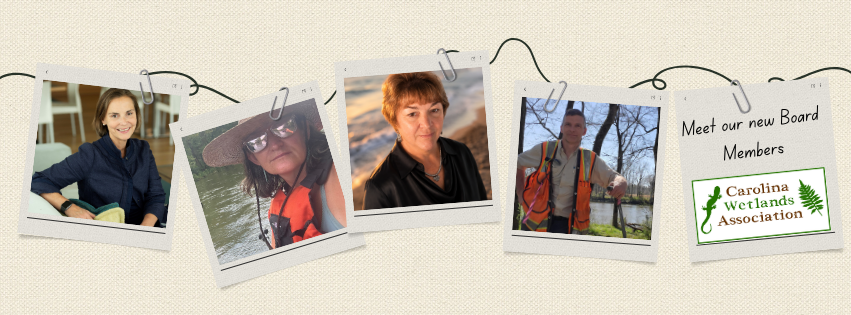
Meet the 2023 Wetland Treasures of the Carolinas

rick.savage • April 19, 2023

Celebrate Wetland Treasures During American Wetlands Month!

Raleigh, NC – Carolina Wetlands Association celebrates wetlands and American Wetlands Month this May by announcing our newest Wetland Treasures. The designation of Wetland Treasures across the Carolinas selects wetlands that are ecologically valuable, protected by conservation plans, and home to an abundance of plant and animal diversity. Our recognized Wetland Treasures provide important benefits to ecosystems and human wellbeing including flood reduction, carbon sequestration, water quality, agriculture, diverse habitats, and recreation. 


Despite their value, nearly 50% of the world’s wetlands have been lost in the last 100 years. Loss of these magnificent natural features endangers wildlife and humans. In North Carolina, 70% of the states endangered and threatened species rely on wetlands. In South Carolina, wetlands are the breeding ground for almost a quarter of the global population for four bird species. 


As the year progresses, our organization looks to continue and expand upon our current Wetland Treasures program to include more community education and engagement opportunities with wetlands. We are hoping to increase the understanding and appreciation of wetlands across the Carolinas so that citizens and scientists alike can participate in their stewardship. As coastal states, we are obligated to protect our wetlands as their disappearance would be devastating for habitats and humans. 


Goose Creek State Park

Beaufort County, NC


  • Wetland Type: Saltwater and tidal freshwater marshes; swamp forest 
  • Site Owner: North Carolina State Parks 
  • Unique Feature: Goose Creek State Park Natural Area is designated as a National Natural Landmark by the National Park Service. The park contains several distinct ecological communities providing important habitat and food sources for a diverse group of animals and providing important wintering areas for several species of waterfowl. ï»¿
  • Tour Date: Saturday, May 6; 1pm-3pm (Register Now


View Factsheet

Horseshoe Farm Nature Preserve 

Wake County, NC

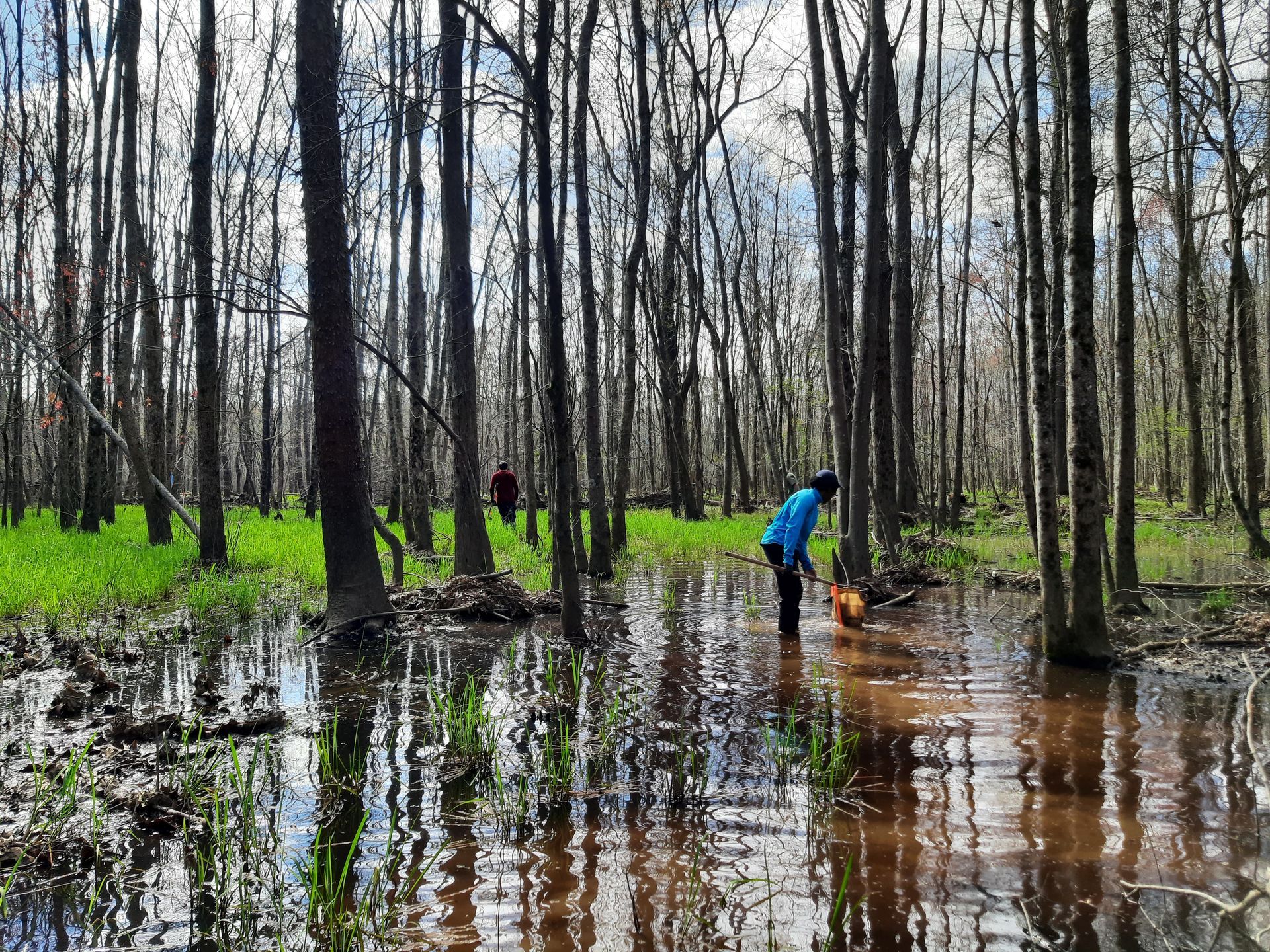
  • Wetland Type: Floodplain Forest consisting of bottomland hardwoods and a system of natural river levees 
  • Site Owner: City of Raleigh, Parks and Nature Preserves 
  • Unique Feature: The North Carolina Natural Heritage Program has designated the floodplain forest that surrounds the meadow as a Significant Natural Heritage Natural Area providing habitats for diverse numbers of plants and animals. 
  • Tour Date: Saturday, May 13; 10am-12pm (Register Now


View Factsheet

Waccamaw National Wildlife Refuge

Georgetown, Horry, and Marion Counties, South Carolina

  • Wetland Type: Alluvial and black water floodplain forested wetlands; tidal forested and emergent wetlands; historic rice fields 
  • Site Owner: U.S. Fish and Wildlife Service 
  • Unique Feature: Waccamaw National Wildlife Refuge spans 54,000-acres and contains portions of the Great Pee Dee, Little Pee Dee, and Waccamaw River. It is one of the most diverse freshwater wetland systems in North America and is the primary drinking water resource for the greater Grand Strand region. 
  • Tour Date: Saturday, May 27; 10am-3pm (Register Now)


View Factsheet

Carolina Wetlands Association now recognizes 38 unique Wetland Treasures across North and South Carolina. Discover the beauty and significance of wetlands by visiting one of our Wetland Treasures. Explore wetlands near you using our interactive Wetland Treasure Map

View Wetland Treasure Map

For more information, contact Rick Savage (rick.savage@carolinawetlands.org), Executive Director of the Carolina Wetlands Association.  


Carolina Wetlands Association thanks the Wisconsin Wetlands Association, whose Wetland Gems program is the model for this program. The Carolina Wetlands Association promotes the understanding, protection, restoration, and enjoyment of North and South Carolina’s wetlands and associated ecosystems through science-based programs, education, and advocacy. 


More information of the Wetland Treasure of the Carolinas.

You might also like

Celebrating Our Carolina Wetlands
By rick.savage July 7, 2026
July is Lakes Appreciation Month, an annual celebration led by the North American Lake Management Society (NALMS) to recognize the many ways lakes enrich our lives—from providing drinking water and recreation to supporting wildlife and local economies. It is also an ideal time to recognize one of a lake’s most important, yet often overlooked, partners: lacustrine wetlands. When many people picture a lake, they imagine open water stretching to the horizon. But healthy lakes are much more than open water. Around their shorelines lies a dynamic transition zone where land and water meet. These shallow, vegetated areas are known as lacustrine wetlands, and they are among the most productive ecosystems in the Carolinas. What’s the Difference Between a Lake and a Wetland? Although they are closely connected, lakes and wetlands are not the same. A lake is generally a body of open water deep enough that sunlight cannot always reach the bottom. In contrast, a wetland is defined by the presence of water at or near the surface long enough to support hydric soils and plants adapted to saturated conditions. Lacustrine wetlands occupy the shallow margins of lakes where water levels fluctuate seasonally. Because sunlight reaches the bottom, these areas support an abundance of native aquatic plants such as pickerelweed, arrowhead, bulrushes, and water lilies. Rather than competing with lakes, these wetlands help lakes function as healthy ecosystems. Think of them as the lake’s living shoreline. Nature’s Water Filter Before rainwater reaches a lake, it often flows through wetlands. Along the way, wetland plants slow runoff, trap sediment, absorb excess nutrients, and filter pollutants. This natural treatment system helps improve water clarity and reduce harmful algal blooms. The same wetlands also soften the impacts of floods by temporarily storing stormwater and slowly releasing it after heavy rains. As we have discussed in recent newsletters, healthy wetlands provide one of our most cost-effective defenses against flooding while protecting downstream communities. A Haven for Wildlife Lacustrine wetlands are biodiversity hotspots. Their shallow waters provide spawning and nursery habitat for fish, breeding grounds for amphibians, nesting areas for turtles, and feeding habitat for wading birds. Dragonflies patrol above the vegetation while pollinators visit native flowering plants along the shoreline. Many species spend their entire lives within these wetlands, while others depend on them during critical stages of migration or reproduction. Remove the wetland, and the lake loses much of the biological richness that makes it special. Carolina’s Lake-Associated Wetlands Across North and South Carolina, remarkable lake-associated wetlands demonstrate this close relationship between lakes and wetlands. The majestic cypress-gum swamps surrounding Lake Waccamaw create habitat for rare plants and animals found nowhere else. The extensive shoreline wetlands of Lake Mattamuskeet, the largest natural lake in North Carolina, support hundreds of thousands of migratory waterfowl each winter. Reservoirs such as Jordan Lake , Falls Lake , and Lake Norman also contain valuable coves, embayments, and shallow wetlands that provide wildlife habitat while improving water quality. Closer to home, many neighborhood lakes, farm ponds, and municipal reservoirs include wetland fringes that quietly perform these same ecological services every day. While these wetlands may seem ordinary, together they form an important network that benefits both people and wildlife. Some of our Wetland Treasures such as Merchants Millpond , Robertson Millpond , and Phelps Lake Shoreline are Lacustrine wetlands. Appreciating the Whole Ecosystem As you celebrate Lakes Appreciation Month, take a moment to look beyond the open water. Notice the cattails swaying along the shoreline, the chorus of frogs after sunset, the great blue heron stalking fish in the shallows, or the dragonflies darting among the lilies. Those vibrant edges are not simply the border of a lake—they are an essential part of the ecosystem. Protecting lakes means protecting the wetlands that surround them. Together, they improve water quality, reduce flooding, support biodiversity, and provide countless opportunities for recreation, education, and inspiration. At the Carolina Wetlands Association, we believe that every wetland matters—whether it borders a coastal marsh, a forested swamp, or a favorite Carolina lake. This July, as we celebrate Lakes Appreciation Month, let’s appreciate these remarkable partnerships between lakes and wetlands and continue working to conserve them for future generations. What is your favorite lake with beautiful wetlands? Share your photos and stories with the Carolina Wetlands Association and help us celebrate the wetland treasures that make our Carolina lakes so special. So go out and explore a wetland at your favorite lake or at one of our Wetland Treasures and remember that Carolina Wetlands Association is actively working to protect all wetlands. Your support is always appreciated. Rick Executive Director Carolina Wetlands Association
By Becky Ryon July 4, 2026
Buffers and Setback adopted by Cities and Towns
By rick.savage June 9, 2026
Hello Wetland Supporters, I hope everyone had a wonderful American Wetlands Month in May and found an opportunity to get outside and explore a wetland. We enjoyed fantastic paddling events at Robertson Millpond Preserve and Lake Mayo, where participants experienced the beauty and importance of these unique ecosystems firsthand. Wetlands have also been in the news recently as the impacts of recent Supreme Court decisions on wetland protections continue to be evaluated. Two recent articles highlight what is at stake: Lisa Sorg in Inside Climate News, Supreme Court’s Limitation on Wetlands Protection Will Make Flooding Worse Jesse Gourevitch and Adam Gold, New Research Shows What’s at Stake When Wetlands Disappea r The central message of both articles is clear: the loss of wetlands leads to increased flooding and rising economic costs for communities. Research cited by Gourevitch and Gold found that wetland loss across the United States has increased residential flood insurance claim payments by an estimated $10.1 billion since 1985 — approximately 9% of all insured riverine flood losses nationwide. The authors also emphasize that policymakers must better recognize the economic value wetlands provide in reducing flood damage to homes and communities. According to the research, the flood-mitigation value of currently unprotected wetlands is estimated at $177 billion nationwide , with North Carolina accounting for approximately $4.6 billion of those benefits . This research reinforces what the Carolina Wetlands Association has long understood: healthy wetlands are essential infrastructure for resilient communities. Through support from the NC Land and Water Fund, Carolina Wetlands Association have received three grants to partner with vulnerable communities to assess flooding concerns and develop restoration plans that incorporate community input, scientific data collection, and hydrologic modeling to identify the most effective wetland restoration strategies. We are also excited to share that we recently received a fourth NC Land and Water Fund grant to begin our first restoration project at Stony Run in Harnett County. Stony Run Walkable Watershed Lumbee Cultural Center Wetland Restoration By working alongside communities and restoring wetland resources, we are helping reduce potential flood damage while also providing additional benefits such as improved water quality, recreation opportunities, shoreline stabilization, environmental education, and greater community resilience. So, the next time you explore a wetland, remember that healthy wetlands mean healthy communities — and your support plays an important role in protecting these valuable ecosystems. Wetlands truly do matter. Best, Rick Savage Executive Director