Plant of the Month Invasion: Stiltgrass, honeysuckle, privet, oh my!

chase.bergeson • September 13, 2023

We're being invaded by these common invasive species at our wetland sites!

In September, we will be heading out to our monitoring sites once again to look for those dreaded invasive, non-native plants! In preparation for our invasive species mapping, this Plant of the Month Blog is a 3 for 1, looking at some of the most prevalent invasives we see at our monitoring sites! 

Why should you care about invasive, non-native species?

Invasive, non-native species are those that evolved in another part of the world but are introduced into a new habitat and able to reproduce, grow quickly and often disrupt native ecosystems. They are frequently introduced as ornamental plants in gardens or accidentally through the global movement of people and goods. Not all non-native species pose a risk to our native ecosystems, but invasives can displace native species by outcompeting them for resources, by parasitizing natives, or by choking them out. This can be especially problematic if the non-natives do not provide the same level of functionality to the rest of the ecosystem, such as food and habitat for wildlife. Some invasives will also form a monoculture, reducing biodiversity in the ecosystem and making ecosystems less resilient to change.  


Threat levels 

The North Carolina Native Plant Society ranks invasive, non-native species with various threat levels based on how likely they are to displace our native plants. Their three rank system is outlined below. All of the invasives that we will look at in this blog are Rank 1: Severe Threat species! In the field we will look for Rank 1 and Rank 2 species. 


Rank 1: Severe Threat 

“Exotic plant species that have invasive characteristics and spread readily into native plant communities, displacing native vegetation.” 


Rank 2: Significant Threat 

“Exotic plant species that display some invasive characteristics, but do not appear to present as great a threat to native communities in NC as the species listed in Rank 1.” 


Rank 3: Lesser Threat 

“Exotic plant species that spread into or around disturbed areas and are presently considered a low threat to native plant communities in NC.”


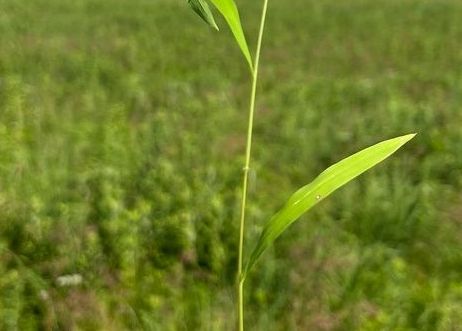
Japanese stilt grass (Microstegium vimineum


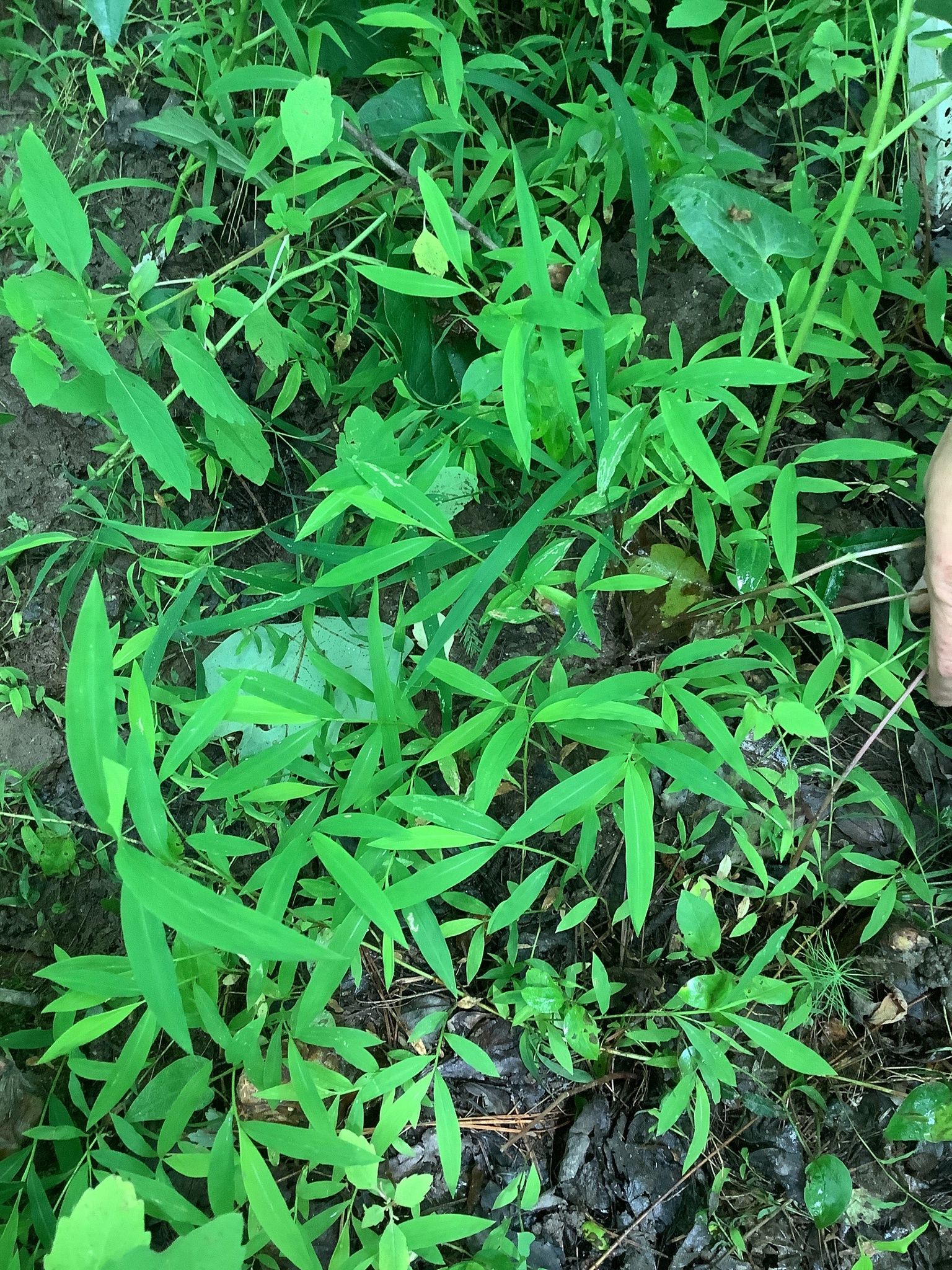
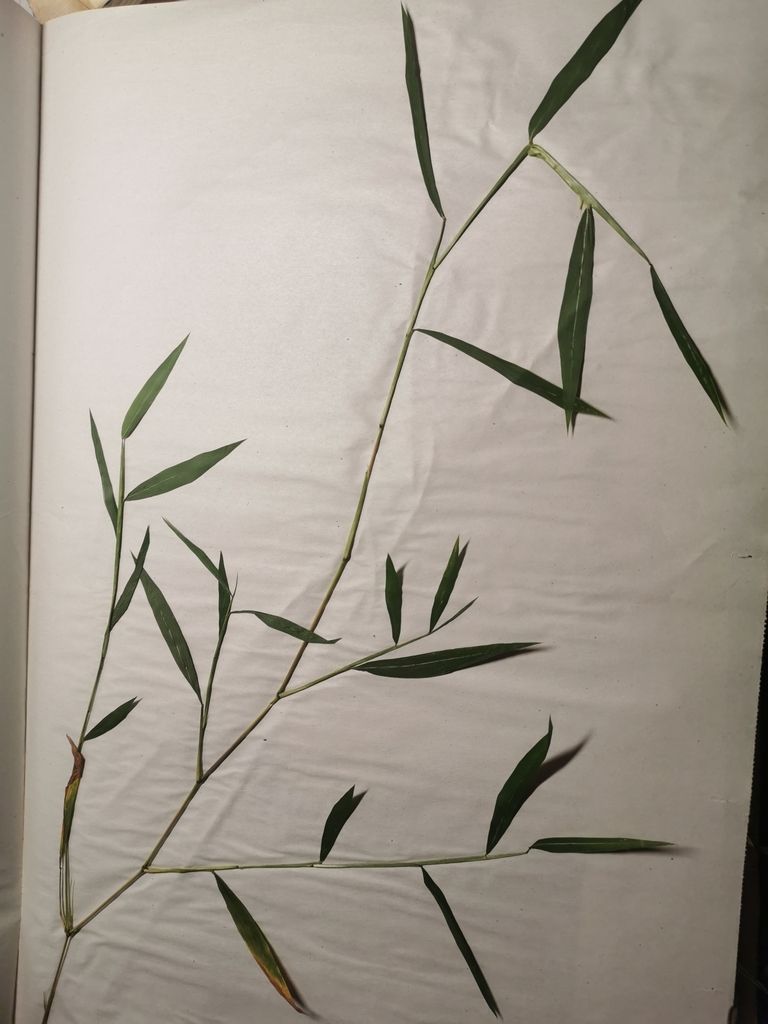
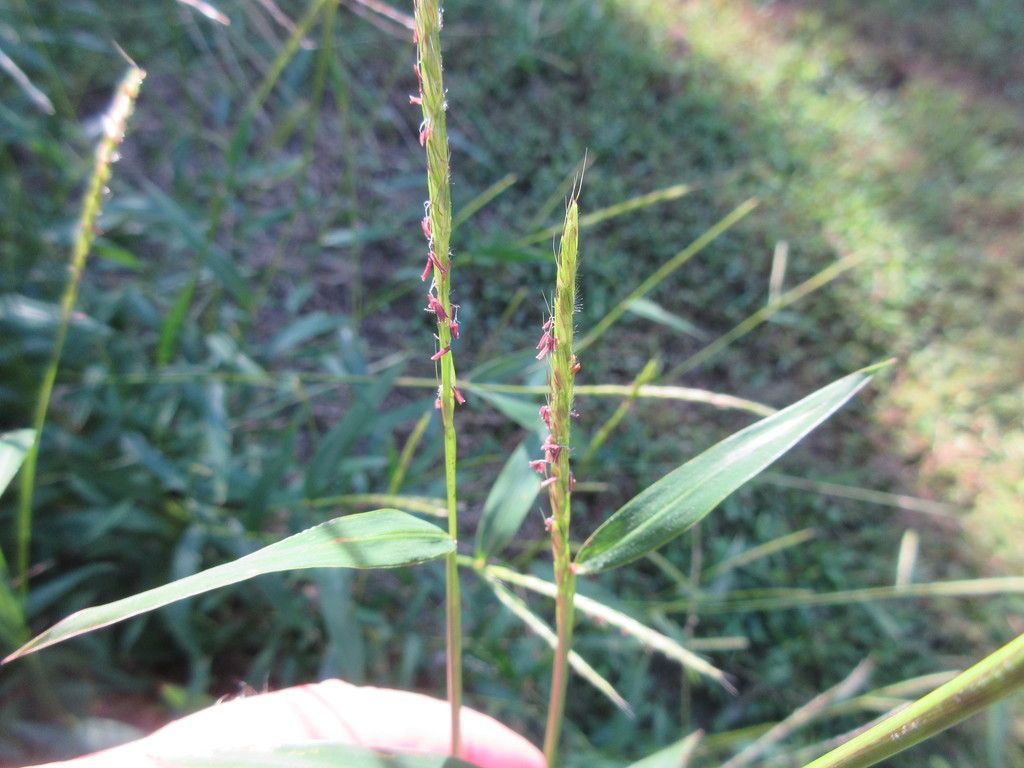
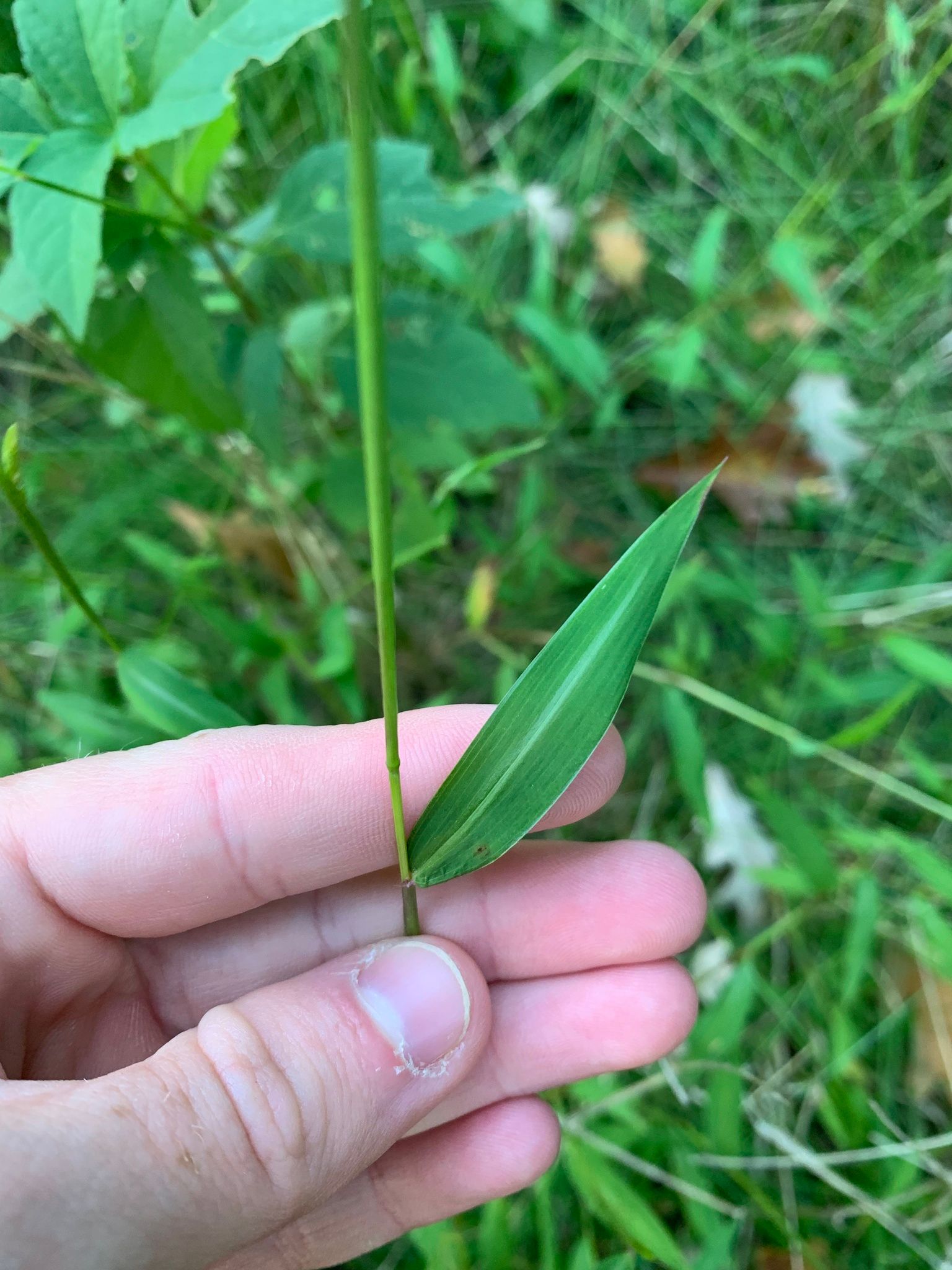
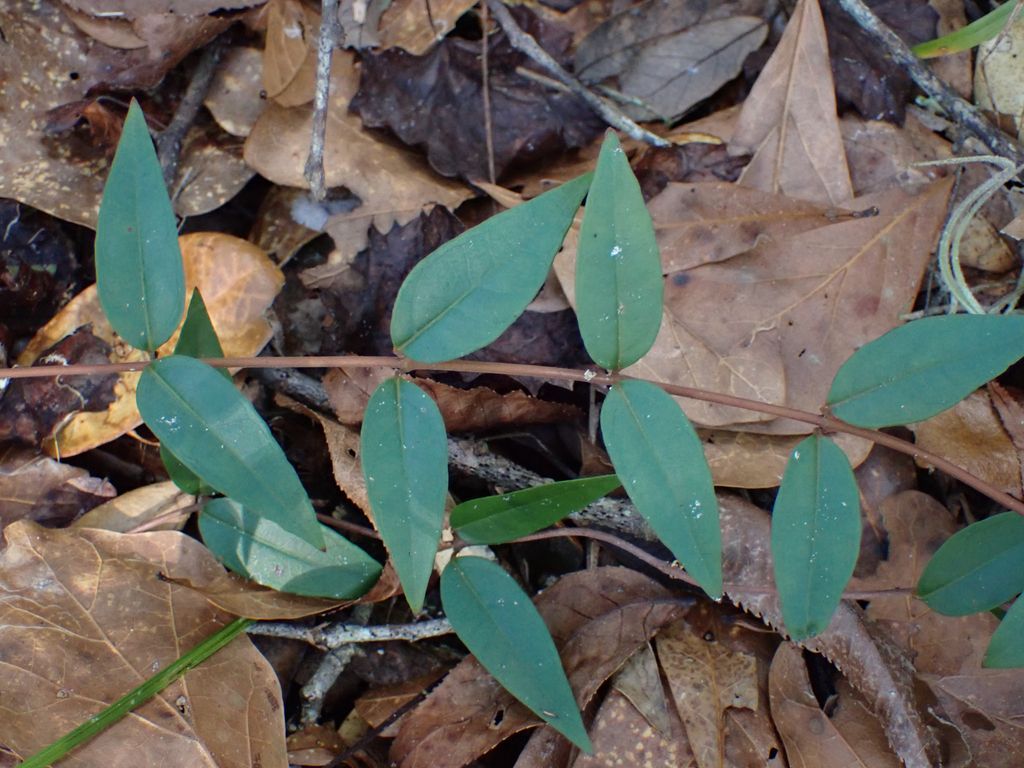
Japanese stilt grass grows in moist soils and can carpet floodplain wetland sites, with its bright green stems. It can grow up to 2-3 feet tall. Its leaves are lance shaped and have a shiny, silvery, off-center midrib. Its leaf blades can be hairy on both sides. Stems are weak and have distinct non-hairy nodes or joints. Although normally bright green, it turns tan in fall and winter. 


White Grass with Hairy Node. Photo credit: Nathan Aaron

Watch out! It might be confused with white grass (Leersia virginica), which it often grows alongside. However, white grass has hairy nodes and no shiny mid-rib. 

Japanese stilt grass may have been introduced as packing material used for shipping from Asia. This grass can grow thickly and shade out other native species. Its many seeds can spread quickly by wind or flood waters. Unlike many other plants, it is not readily browsed by deer. All these factors lead to a very problematic invasive!


Photo credit: abcdefgewing

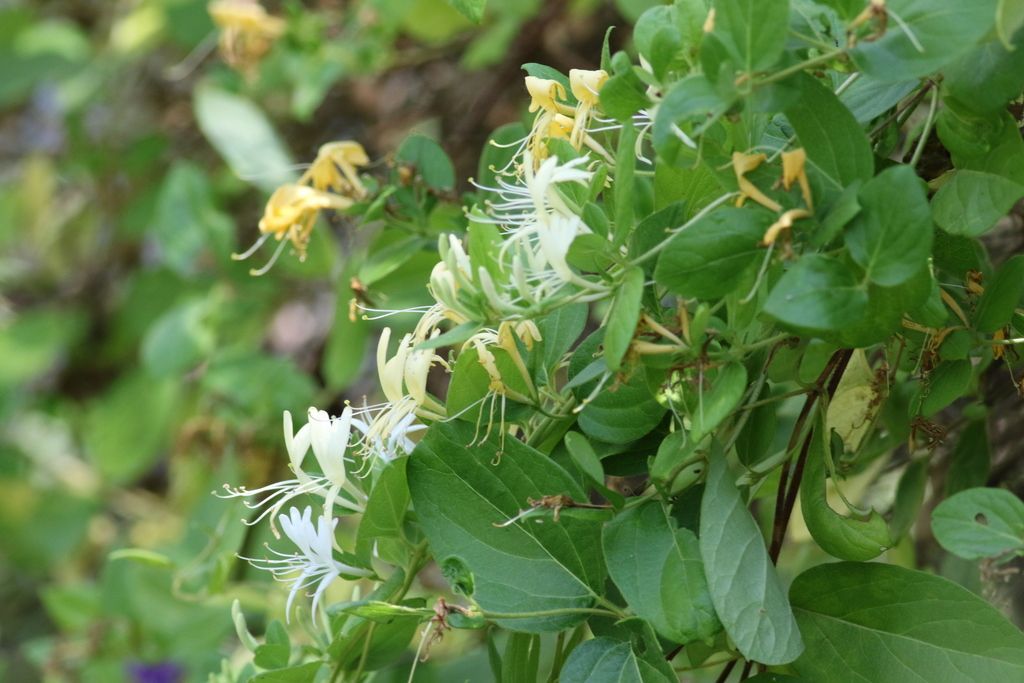
Japanese honeysuckle (Lonicera japonica


Many people have fond memories of honeysuckle plants... the sweet aroma of its flowers and the sweet taste of nectar sucked out of the flowers during the summertime.  


However, Japanese honeysuckle can be highly invasive, outcompeting native plants and girdling young trees.  


Japanese honeysuckle was brought over from Asia as an ornamental plant and is still sold and planted in gardens for ornamental value or planted for the browsing of horses. Unfortunately, once planted, this species can quickly spread both by seed and via their root systems. Once it spreads, it can outcompete native plants for nutrients and grow up small trees, blocking out sunlight for the trees and plants below. It will grow in disturbed areas, such as floodplains, which may be one of the reasons we see it at our sites.  


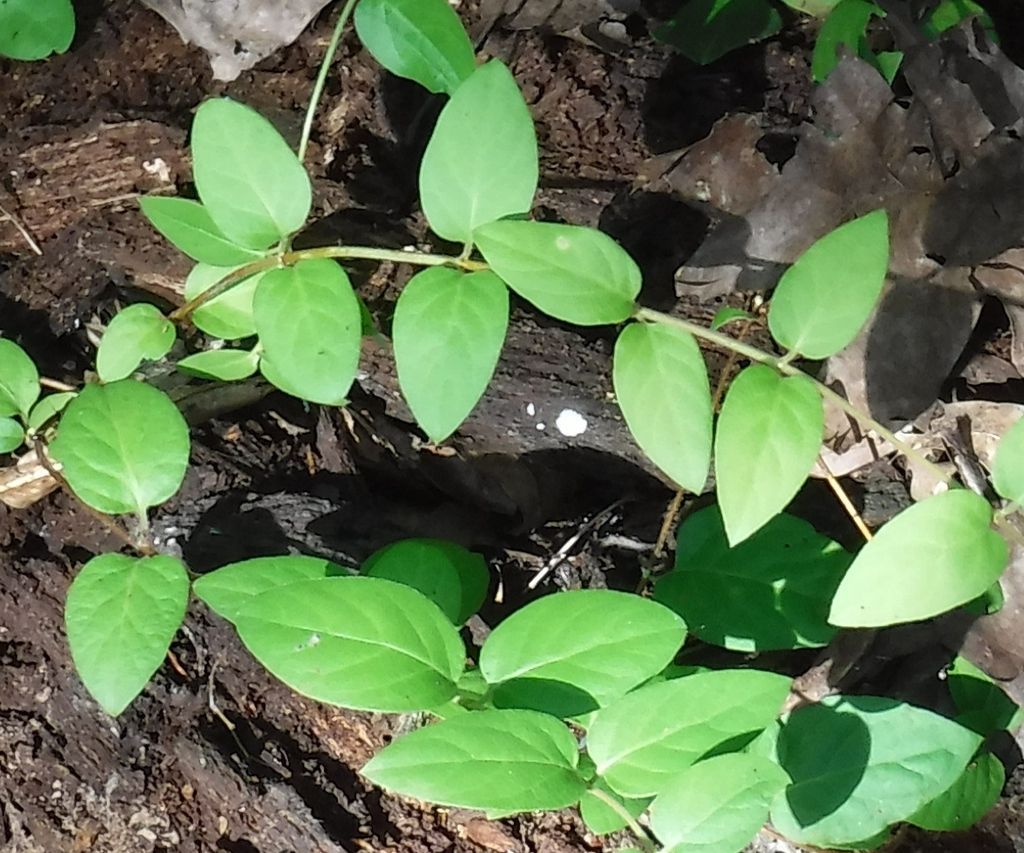
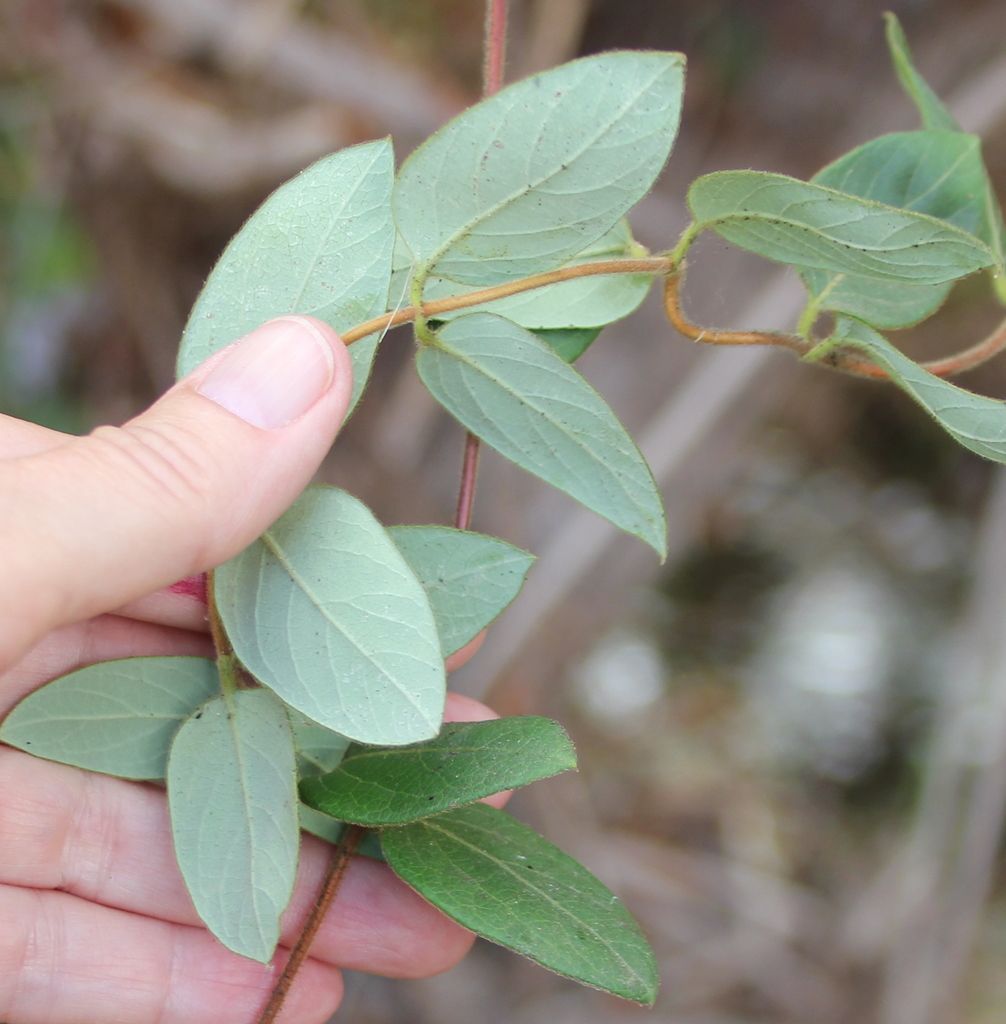
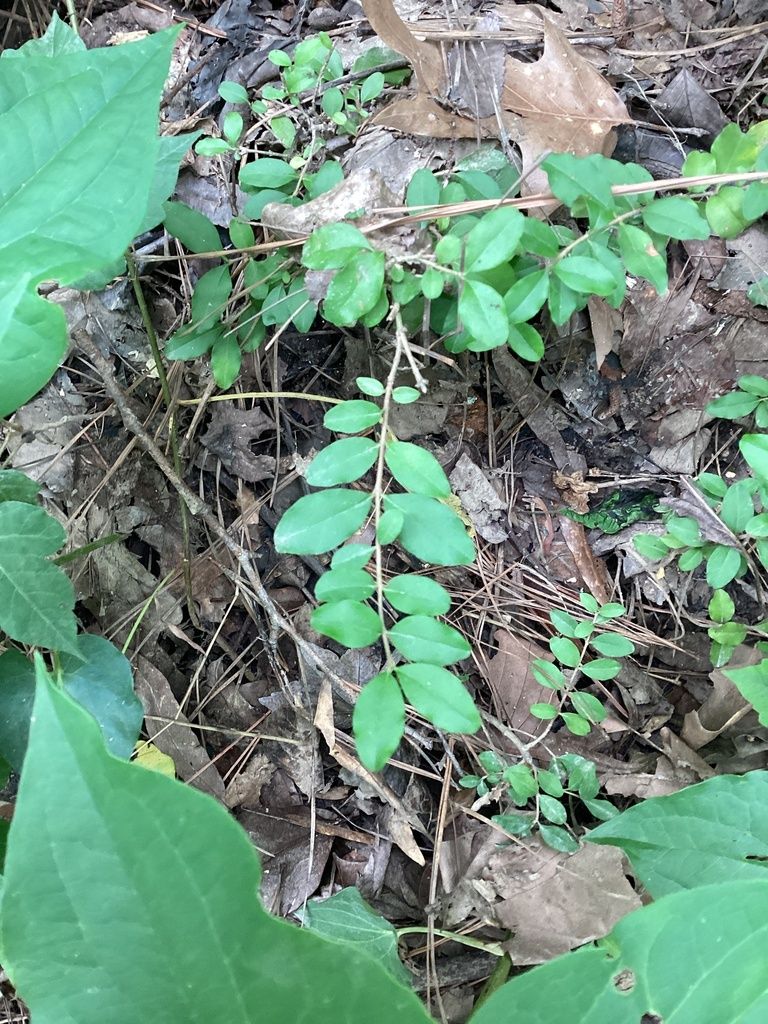
When you can’t smell its white and yellow flowers, Japanese honeysuckle can be identified by it’s small (1-2.5 inch), oval, entire (smooth), green, opposite leaves with pale undersides. Younger leaves, may lobe.  


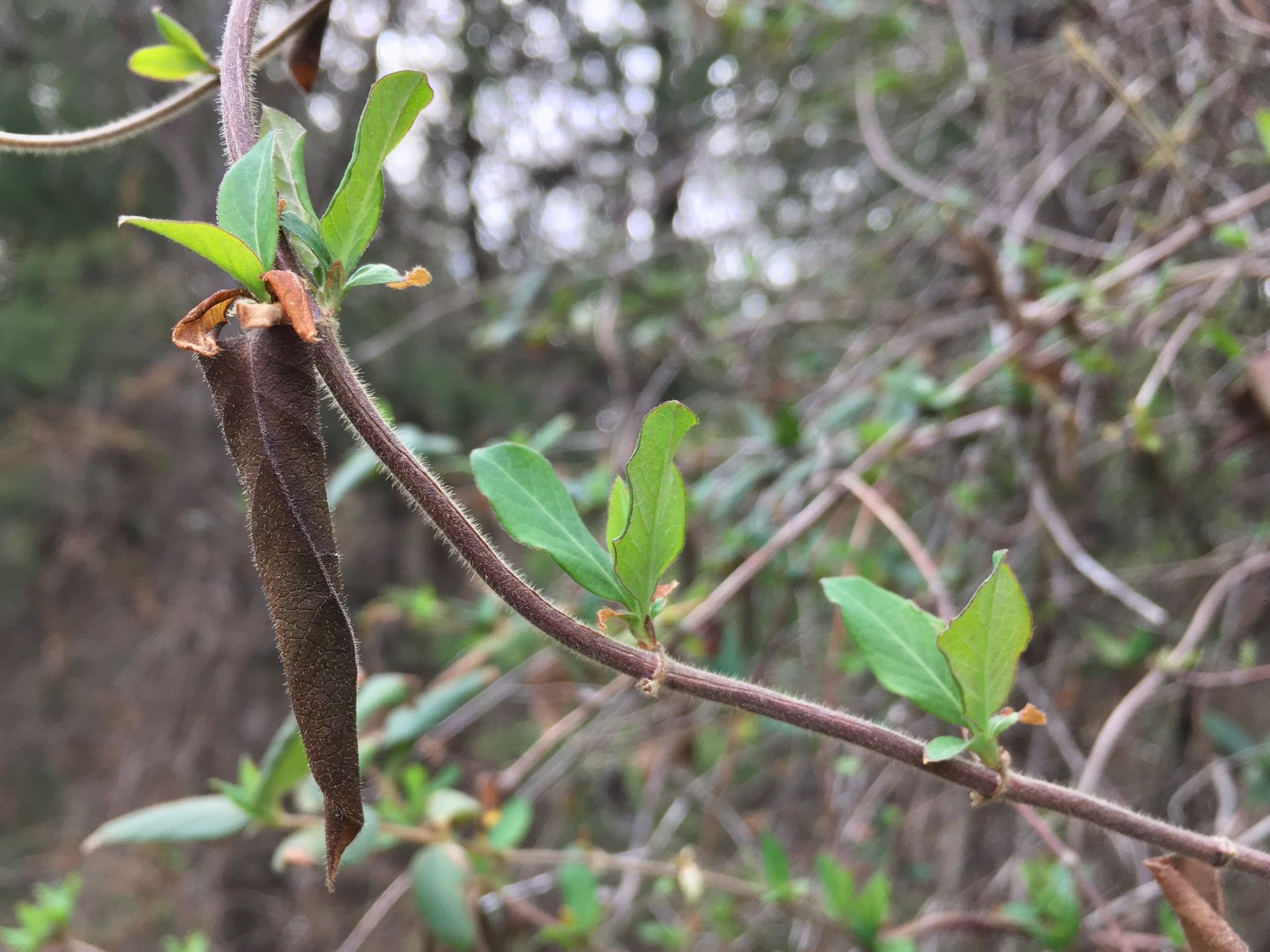
The leaves grow along a thin, hairy, reddish to brown vine. The vine can grow along the ground or vertically up small trees. On older plants, the vine can get up to 2 inches in diameter and develop a splintery quality. 


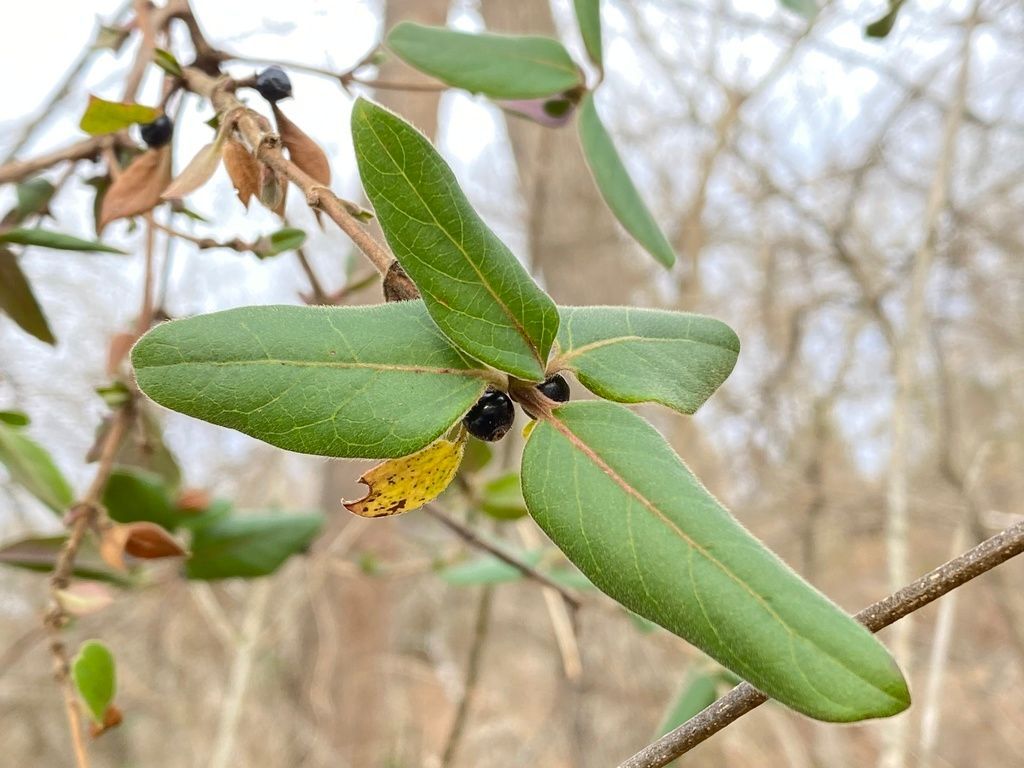
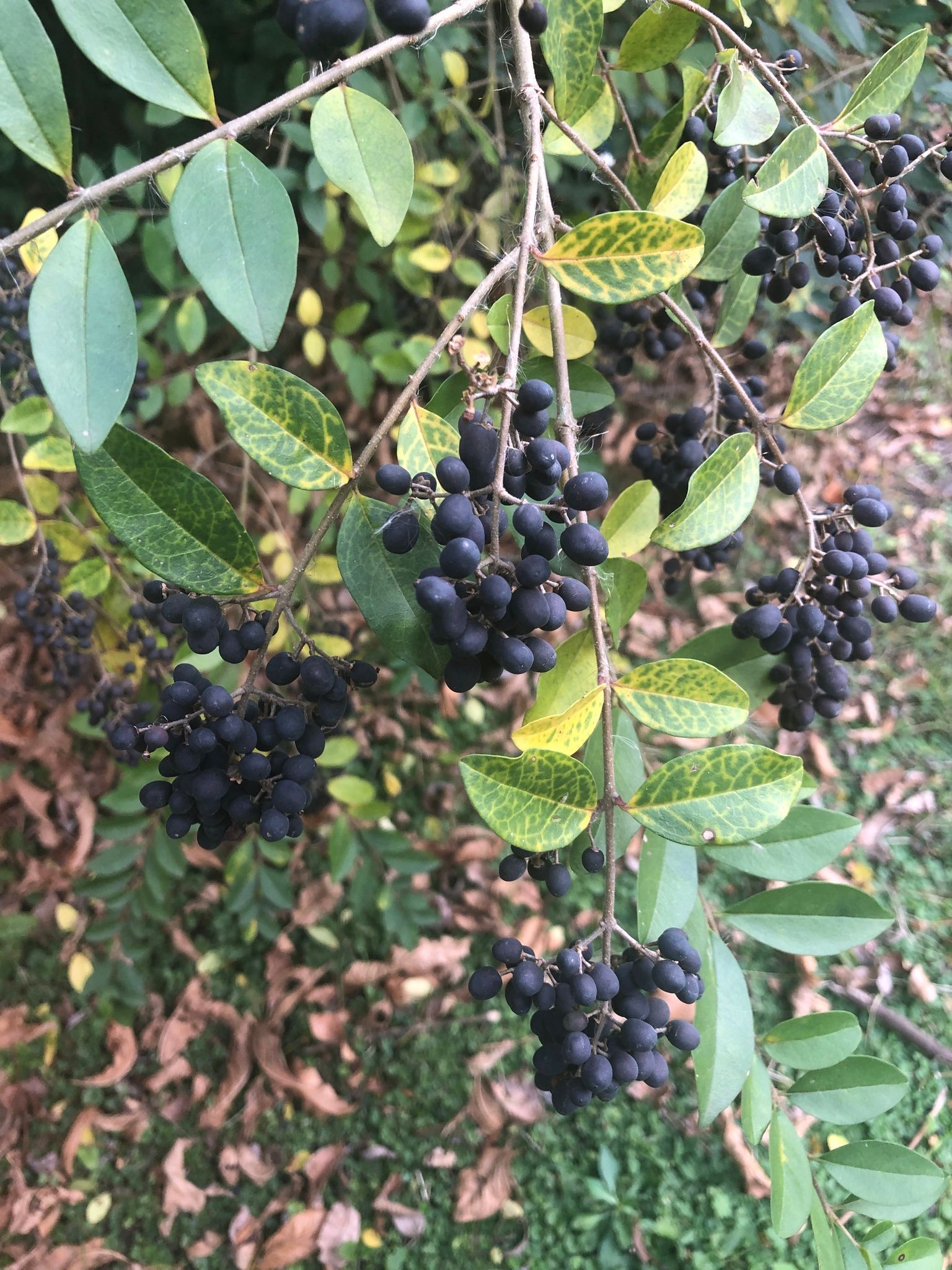
In fall it fruits with small, black berries. 
Photo credit: Dwayne Estes

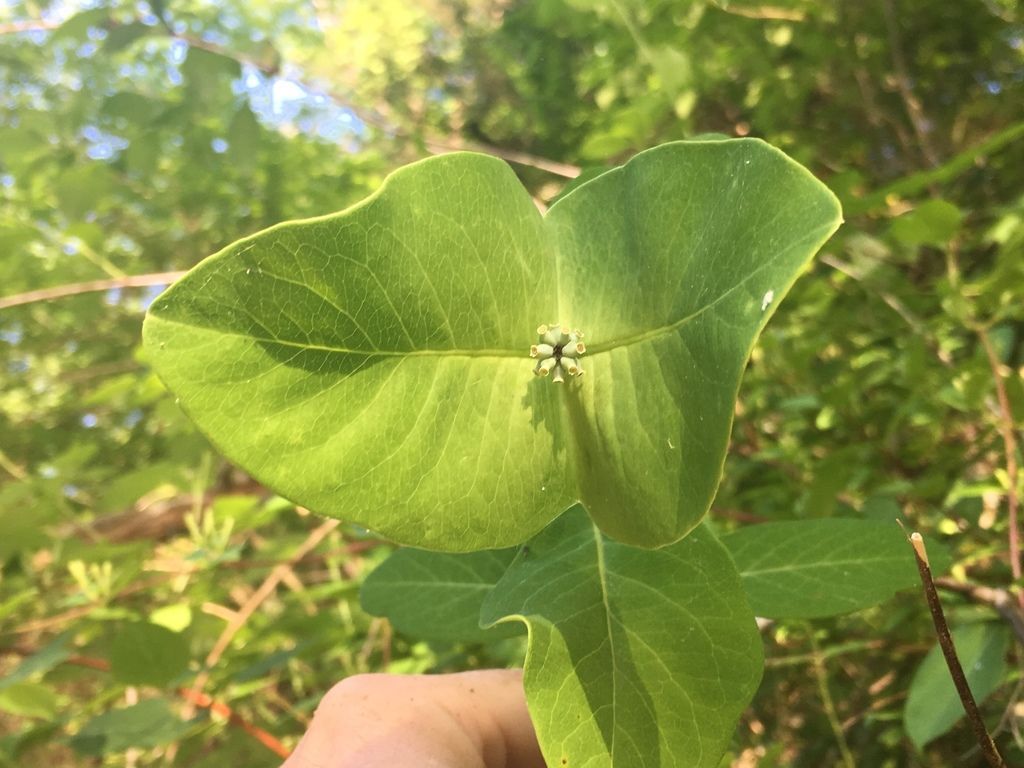
We also have native honeysuckles that can be distinguished by some of their leaves being fused, rather than separate. They also have reddish fruits and hairless stems.  

Photo credit: Dwayne Estes

Japanese honeysuckle can also be confused with yellow jessamine (Gelsemium sempervirens), which has thinner, longer, shiny leaves, and hairless stems. 


Photo credit: Solana Gonzales Nova

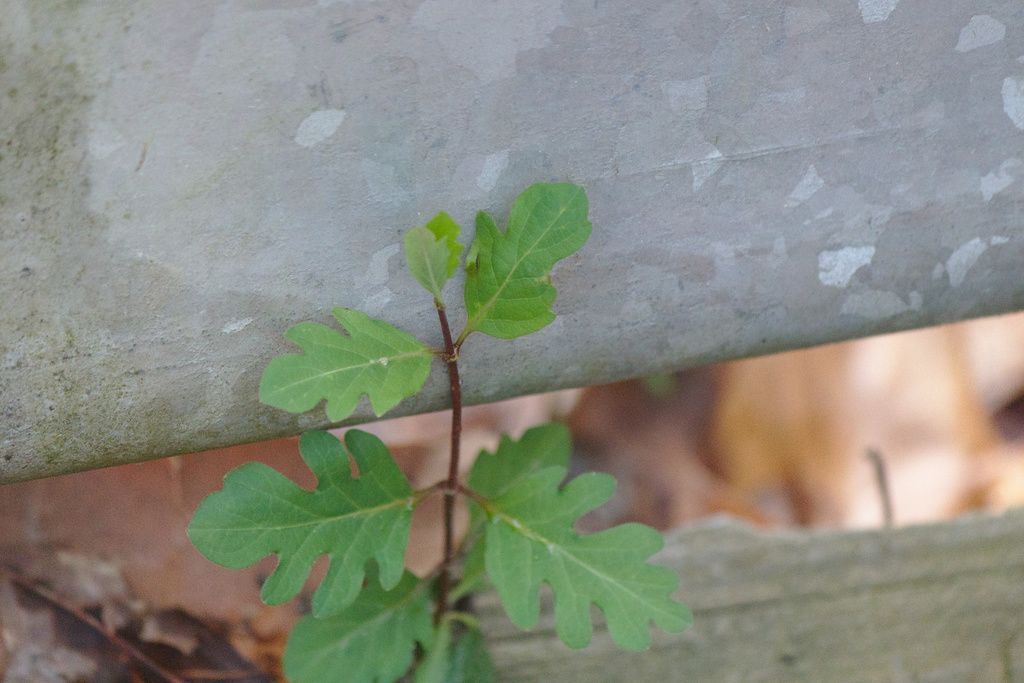
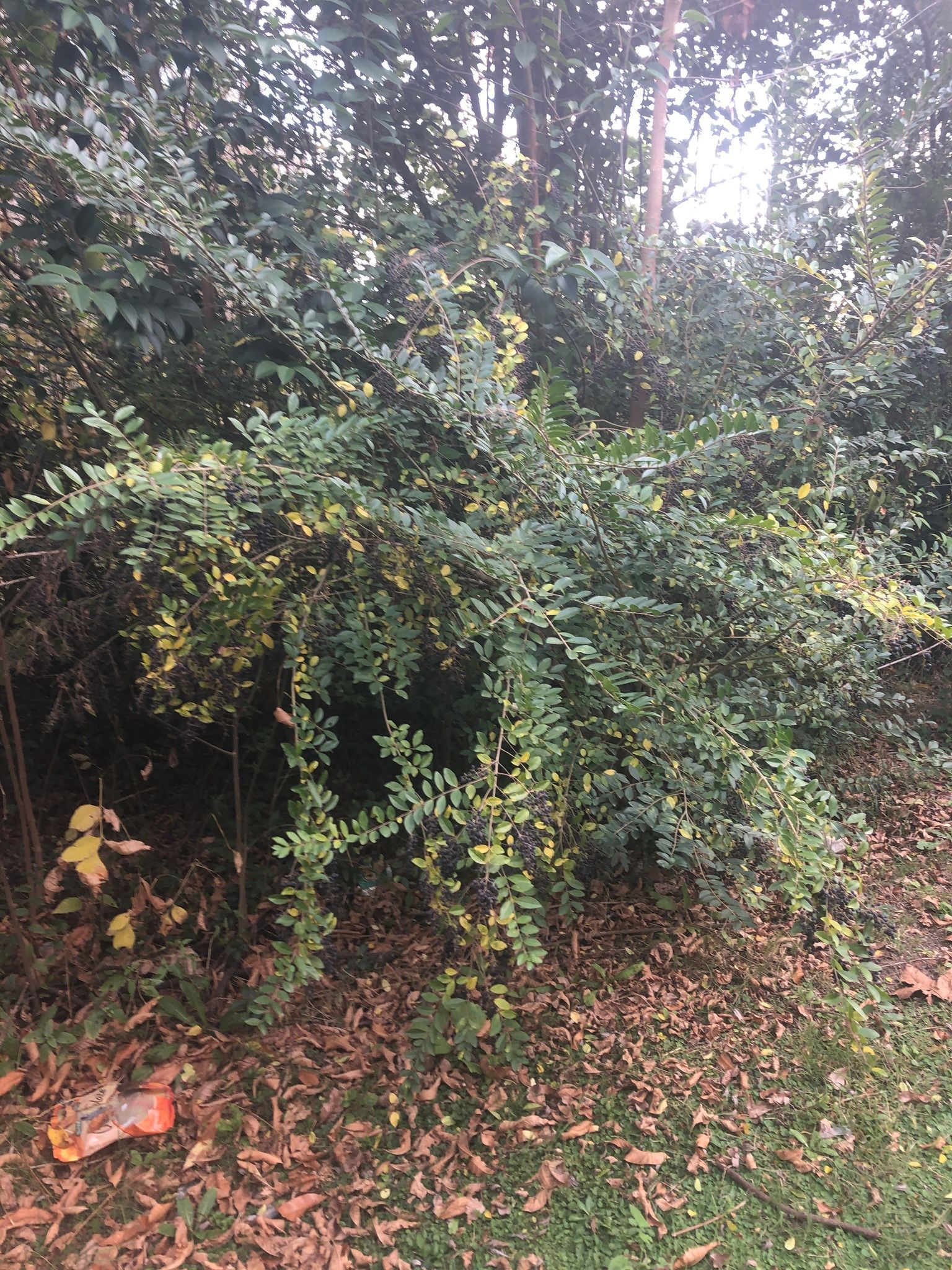
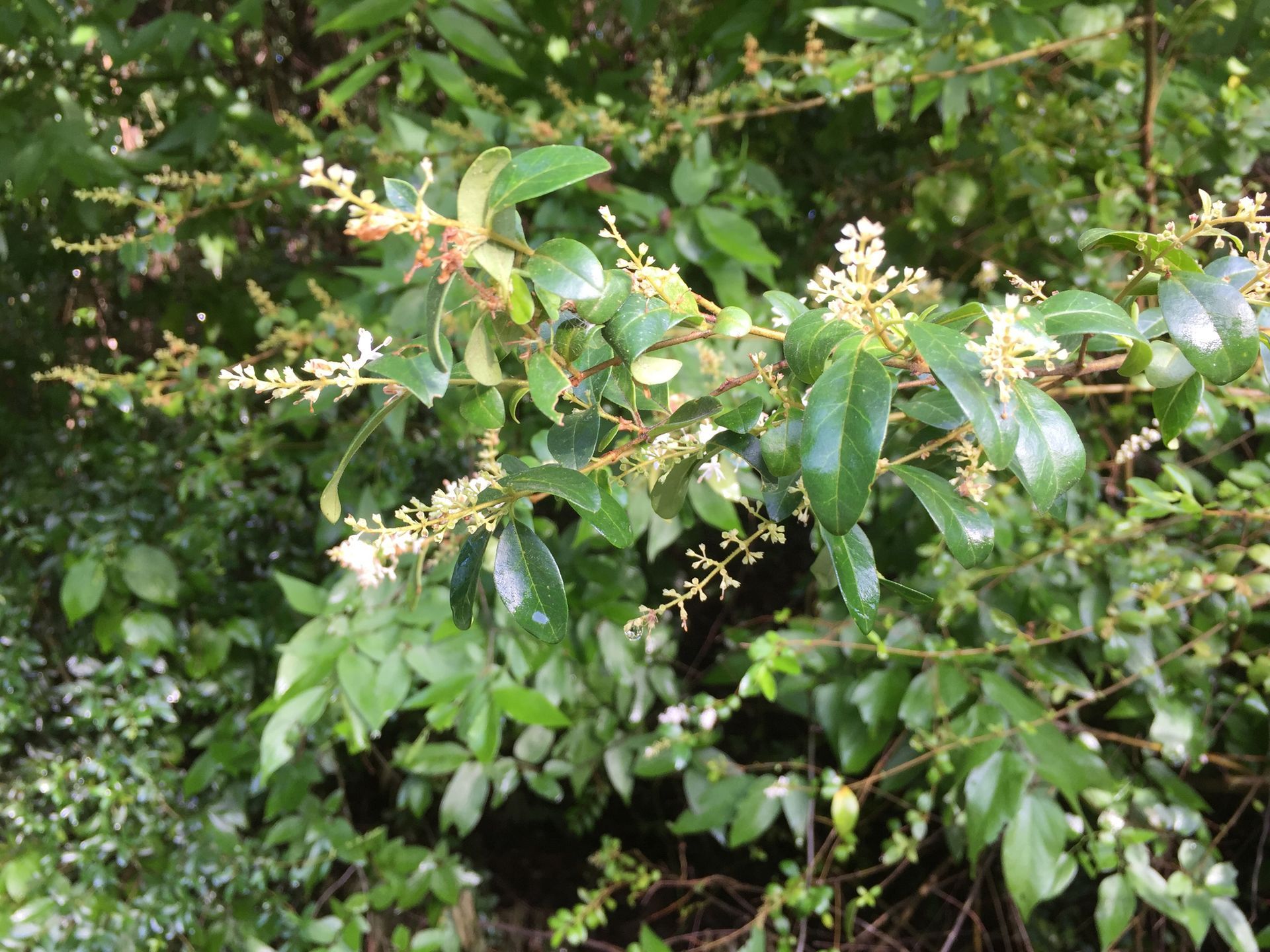
Chinese privet (Ligustrum sinense


Chinese privet was originally used in landscaping. However, it has also become an aggressive and far-reaching invasive.  


It can be a small to large shrub and it does particularly well in floodplains, due to its affinity for moist soils and few native shrubs to compete with. However, it can quickly grow into dense thickets that outcompete natives and block sunlight from other plants. It spreads by both root and seed. Its small, dark purple drupes are popular among birds who spread its seeds quickly.  


Similarly to Japanese honeysuckle, Chinese privet has small, entire (smooth), oval, opposite, green leaves. However, leaves tend to be smaller and shinier than honeysuckle. This plant also grows as a many-stemmed, bushy shrub, not a vine.  It has small white flowers and is frequently evergreen in North Carolina. It has smooth tan/grey bark. 


While many invasive species are difficult to combat and there is debate about what their role should be in an ever-changing world, identifying where they are and trying to control or stop their spread can be very important in protecting our wetland resources.


Where can I learn more? 

NC Native Plant Society Non-native Invasive list: https://ncwildflower.org/invasive-exotic-species-list/ 


NCDOT Invasive Exotic Plant Guide: https://connect.ncdot.gov/resources/Environmental/Compliance%20Guides%20and%20Procedures/Invasive_Exotic_Plants_Manual_May_2012.pdf 


A field guide for the identification of invasive plants in southern forests: https://www.fs.usda.gov/research/treesearch/35292  


Mistaken Identity? Invasive plants and their native look alikes: https://www.nybg.org/files/scientists/rnaczi/Mistaken_Identity_Final.pdf 


You might also like

By rick.savage November 10, 2025
A Look Back: From Humble Beginnings to Statewide Impact It’s hard to believe how far we’ve come since that first meeting in June 2015 , when a small group of us gathered at a Starbucks on Lake Boone Trail to form our very first Board of Directors . I was elected President, with Steve Rebak as Vice President, Kristie Gianopulos as Treasurer, and John Dorney as Secretary. Our founding board also included Kim Matthews, Stratford Kay, Laura England , and others who helped shape the foundation of our organization. Ginny Baker (Daniel) and Robert Truesdale became co-chairs of the Science Committee, and later Amin Davis stepped up to lead the Program Committee. Together, we drafted our bylaws and registered as a nonprofit corporation in North Carolina. In 2016 , with the invaluable help of Chad Guthrie and the UNC School of Law , we achieved our 501(c)(3) tax-exempt status — a huge step in establishing ourselves as a recognized nonprofit. Growing Our Reach Our early years focused on building visibility and partnerships. I met with leaders across environmental and conservation organizations, and we participated in countless community and environmental events. With Laura England’s leadership, we launched the Wetland Treasures of the Carolinas Program , which has become our flagship initiative — celebrating 36 Wetland Treasures to date (23 in North Carolina and 13 in South Carolina). Expanding Our Mission In 2019 , we took a bold leap by applying for our first EPA Wetlands Program Grant in partnership with NC State University and RTI International . This effort led to the creation of a Volunteer Wetlands Monitoring Program , which became a model for restoring the state’s wetlands monitoring efforts. Building on that success, a second EPA grant in 2024 allowed us to expand into Hendersonville, NC , Horry County, SC , and Columbia, SC — broadening our network and community engagement. We’re now seeking a third grant to continue this important work. Supporting Vulnerable Communities Our mission has also grown to include working with vulnerable and flood-prone communities along our coastal rivers. Through collaboration with the North Carolina Office of Resilience, Working and Natural Lands initiatives, and Executive Order 305, we’ve focused on using natural infrastructure to reduce flooding and restore ecosystems. Thanks to support from the North Carolina Land and Water Fund , we’ve completed flood mitigation planning in Harnett County (Dunn, NC) on Stony Run , and are thrilled to have received a new grant to begin restoration work there. We’ve also received funding to: Assess flooding at Parker Creek (Pitt County) in a historically underserved community, Work with the Lumbee Tribe to restore wetlands near their Cultural Center, and Collaborate with the Bucksport community — with support from Defenders of Wildlife , the Betterment of Bucksport , and two Duke Accelerator grants — to address flooding linked to increased development. Looking Ahead We’ve come a long way in ten years, but there’s still much to do. Grants make much of our work possible, but they don’t cover everything. We rely on the generosity of our supporters and volunteers to help us sustain and grow our programs. Please consider celebrating this milestone with a donation — large or small — to help keep our mission thriving for the next decade and beyond. Join us on November 16th to celebrate our journey, reconnect with old friends, and look forward to the future of wetlands conservation together. Thank you for being part of our story, Rick Savage Executive Director Carolina Wetlands Association
By kim.matthews October 25, 2025
Join Our 10-Year Anniversary Celebration! We are incredibly proud of all we’ve accomplished together over the last decade, and we can’t wait to celebrate this anniversary with the entire Carolina wetlands community. From advocating for critical policies to advancing wetland science and engaging thousands of volunteers and supporters, our work is only possible because of your dedication. 10 Years of Impact: Our Guiding Mission Since the beginning, Carolina Wetlands Association has been driven by a set of core principles that guide our work across four key program areas: Outreach: Promoting widespread understanding of and engagement in wetlands. Advocacy: Encouraging policies and programs that promote wetland conservation and protection. Science: Encouraging the advancement of wetland science and practices. Sustainability: Ensuring a viable organization for the long term to protect, promote, and restore wetlands. Whether it’s protecting our saltmarshes as nature’s climate protectors (a topic we explore in depth in our recent white paper ) or coordinating hundreds of volunteers to monitor wetlands, our commitment remains the same: protecting and preserving the vital wetlands of the Carolinas. Mark Your Calendar: Sunday November 16th Join us for a relaxed and festive evening to toast a decade of wetland conservation, education, and advocacy! Enjoy local brews, connect with fellow supporters, and celebrate the incredible impact we’ve made together. Whether you've been with us from the start or are just getting involved, we'd love to see you there! Date: Sunday, November 16, 2025 Location: Hi Wire Brewing Company, Address: 800 Taylor St #9-150, Durham, NC 27701 [ Directions ] Time: 2:00 PM – 5:00 PM We look forward to celebrating this incredible milestone with you and kicking off the next decade of protecting the Carolina Wetlands!
Volunteer Appreciation day is October 12, 2025
By aaron.ellis September 12, 2025
Please join us as we celebrate volunteers of our wetland monitoring program on October 12, 2025. Our event will take place in Roxboro, NC and start with a paddle tour of living shoreline and mixer at Black Creek Brewery. All are welcome but please RSVP.