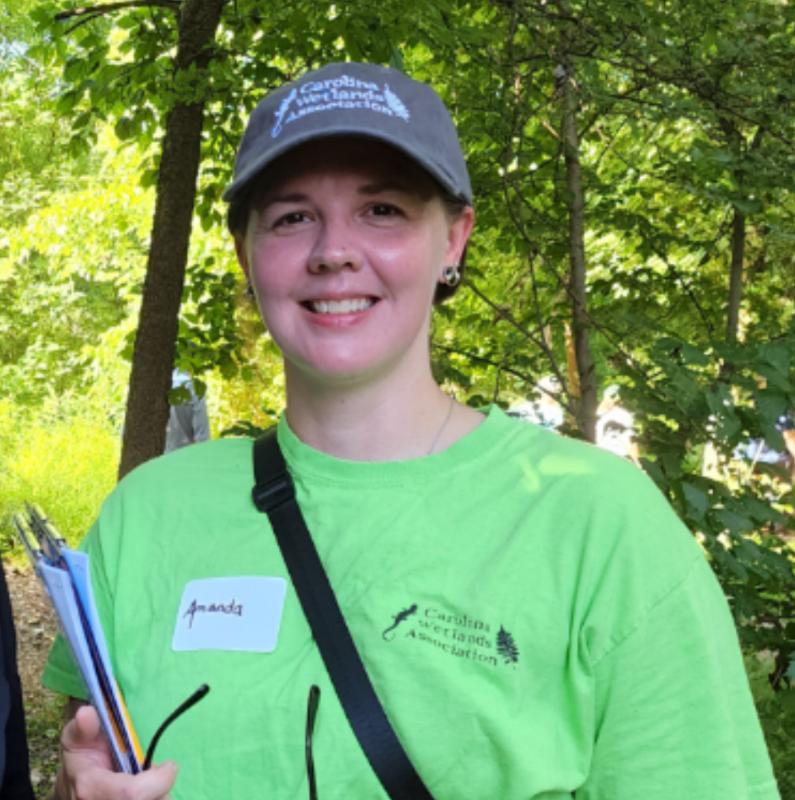
MEET VWMP PRINCIPAL INVESTIGATOR AMANDA JOHNSON

chase.bergeson • March 22, 2023

This is the second in an interview series of the principal investigators of the Volunteer Wetland Monitoring Program. If you missed it, read our last post about Thomas Reed.


Amanda Johnson


Senior Environmental Scientist at Timmons Group


Project Coordinator


Where did you grow up and if not the Raleigh/Durham area, what brought you here? 

I grew up in central Florida and moved to Waynesville, North Carolina when I was in middle school. I went to college at the University of North Carolina Wilmington (UNCW). I moved to Raleigh for graduate school and really enjoyed the Piedmont. I moved back to Wilmington after school but decided to come back to Raleigh to be closer to my family and for better job opportunities.


Where did you go to school and what led you to your career? 

I received a Master of Natural Resources degree from North Carolina State University (NCSU). While earning my degree, I had an internship and then eventually a seasonal position with the North Carolina Division of Water Quality (now Division of Water Resources) where I learned about wetlands, streams, and wetland mitigation sites. I decided I wanted a career where I can work in the field, so I pursued a job as an environmental consultant.


Could you tell us about your job at Timmons Group? 

I work as a Senior Environmental Scientist at Timmons Group where most of my work is focused on wetland and stream delineations and functional assessments, protected species habitat surveys, and Clean Water Act Section 401/404 permitting.


What sparked your interest in your area of expertise?

As a child, I loved playing outside and thought I wanted to be a zookeeper. While I was in high school, I had a science teacher that inspired me to study environmental science. He encouraged me to apply for a summer internship with the National Park Service, which I got. We studied salamanders, snakes, Vesper Sparrows, moths, planthoppers, and ozone effects on plants. I was hooked on environmental science. During my senior year at UNCW, I learned about wetland restoration and thought it was fascinating, so I decided to study restoration ecology at NCSU. My internship during graduate school gave me fieldwork experience, which set me up for my first job as an environmental consultant at a small firm in Wilmington.


What do you enjoy most about your role in the VWMP? What is your favorite memory so far working in the wetlands with the VWMP volunteers? 

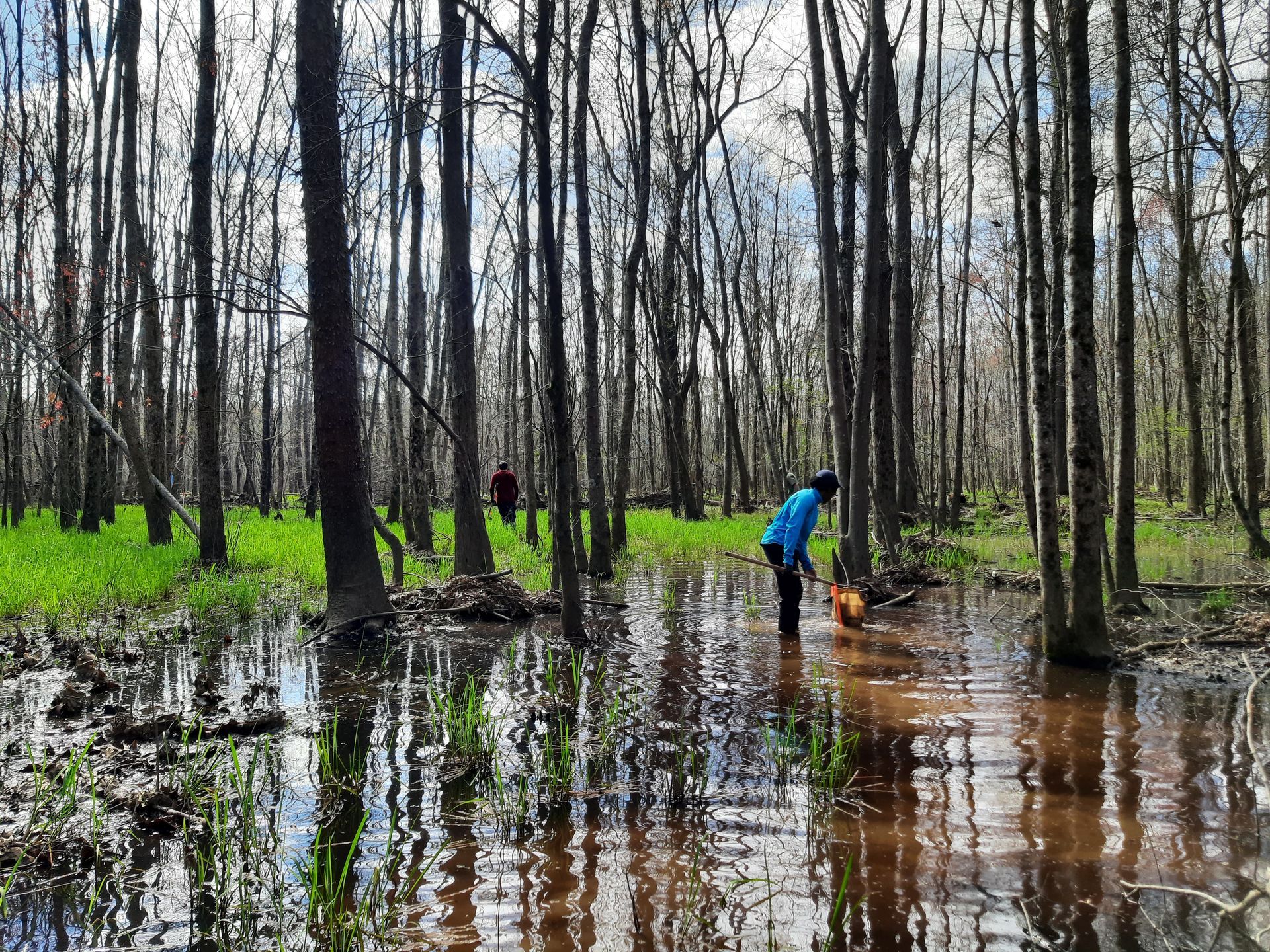
I have really enjoyed establishing protocols for data collection and exploring the capabilities of different platforms, such as Wildnote and iNaturalist, to record our data. We have worked so hard to get the VWMP going, so it is wonderful seeing our volunteers in the field asking questions, collecting data, and having a good time. It was no surprise that our volunteers loved our amphibian surveys, but I must say, I was amazed at how much our volunteers were interested in learning about soils and getting their hands dirty at our sampling event in December 2022. I am looking forward to our next sampling events in 2023!
You might also like

Celebrating Our Carolina Wetlands

By rick.savage June 9, 2026
Hello Wetland Supporters, I hope everyone had a wonderful American Wetlands Month in May and found an opportunity to get outside and explore a wetland. We enjoyed fantastic paddling events at Robertson Millpond Preserve and Lake Mayo, where participants experienced the beauty and importance of these unique ecosystems firsthand. Wetlands have also been in the news recently as the impacts of recent Supreme Court decisions on wetland protections continue to be evaluated. Two recent articles highlight what is at stake: Lisa Sorg in Inside Climate News, Supreme Court’s Limitation on Wetlands Protection Will Make Flooding Worse Jesse Gourevitch and Adam Gold, New Research Shows What’s at Stake When Wetlands Disappea r The central message of both articles is clear: the loss of wetlands leads to increased flooding and rising economic costs for communities. Research cited by Gourevitch and Gold found that wetland loss across the United States has increased residential flood insurance claim payments by an estimated $10.1 billion since 1985 — approximately 9% of all insured riverine flood losses nationwide. The authors also emphasize that policymakers must better recognize the economic value wetlands provide in reducing flood damage to homes and communities. According to the research, the flood-mitigation value of currently unprotected wetlands is estimated at $177 billion nationwide , with North Carolina accounting for approximately $4.6 billion of those benefits . This research reinforces what the Carolina Wetlands Association has long understood: healthy wetlands are essential infrastructure for resilient communities. Through support from the NC Land and Water Fund, Carolina Wetlands Association have received three grants to partner with vulnerable communities to assess flooding concerns and develop restoration plans that incorporate community input, scientific data collection, and hydrologic modeling to identify the most effective wetland restoration strategies. We are also excited to share that we recently received a fourth NC Land and Water Fund grant to begin our first restoration project at Stony Run in Harnett County. Stony Run Walkable Watershed Lumbee Cultural Center Wetland Restoration By working alongside communities and restoring wetland resources, we are helping reduce potential flood damage while also providing additional benefits such as improved water quality, recreation opportunities, shoreline stabilization, environmental education, and greater community resilience. So, the next time you explore a wetland, remember that healthy wetlands mean healthy communities — and your support plays an important role in protecting these valuable ecosystems. Wetlands truly do matter. Best, Rick Savage Executive Director
Kayakers
By aaron.ellis June 9, 2026
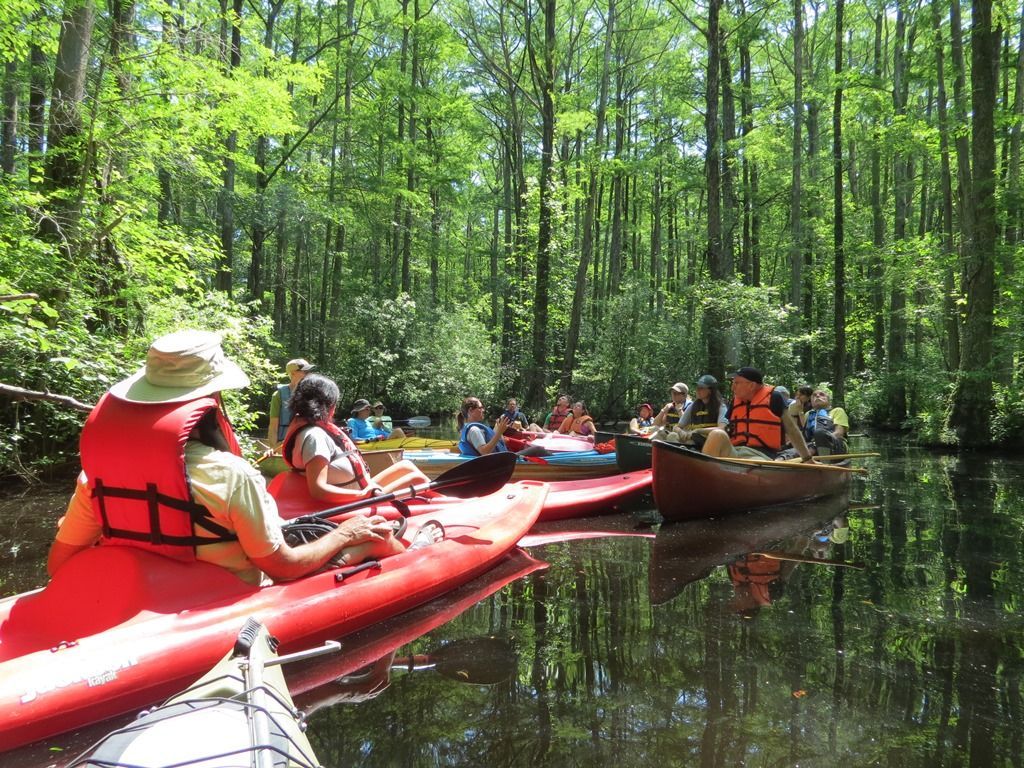
Wetland supporters enjoyed two memorable May paddling events, exploring North Carolina’s beautiful wetlands while spotting wildlife and learning from local experts.
PP
By kim.matthews May 7, 2026
May is American Wetlands Month - yes, an entire month to celebrate these ecologically diverse and economically important ecosystems. Wetlands account for 14% of the land area in North Carolina and almost 20% of South Carolina!