2024 Summer Interns
This summer, we had the privilege of having two undergraduate interns to assist us with ongoing projects, outreach programs, and their own initiatives. In this blog we asked them about themselves, and their experience working with Carolina Wetlands Association this summer.
1.Tell us about you and your academic background.
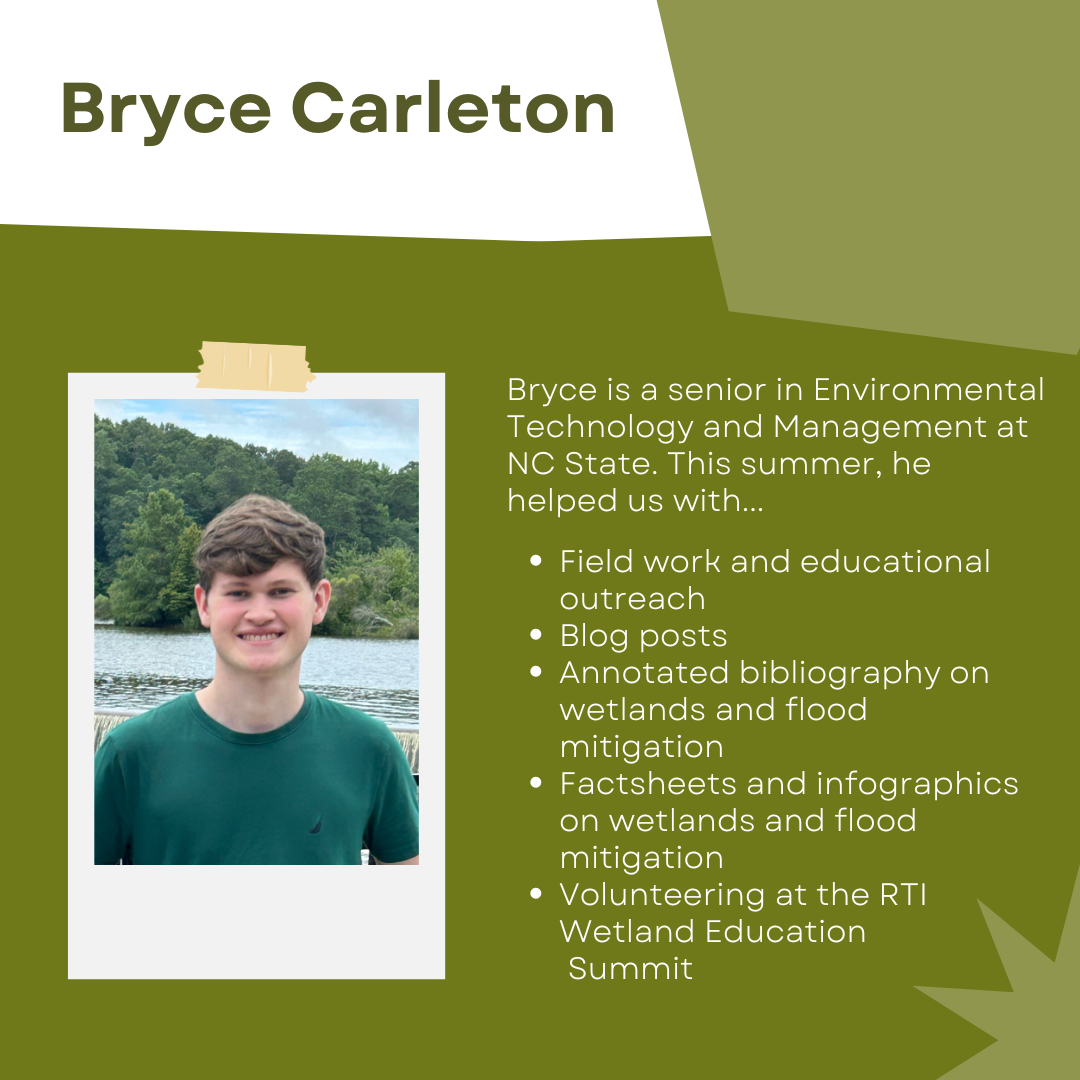
Bryce Carleton: I went into college undecided and tried a bunch of options out. I took business, psychology, meteorology classes, etc., and I didn’t find myself moving forward in these paths for different reasons. I decided to take a step back and think about what classes during all of my schooling that I took seriously not just to get a good grade, and that was my environmental science class. So, I moved forward with this focus and decided to aim for majoring in Environmental Tech and Management, took some classes for it and they interested me, and I plan to graduate next spring with a bachelor's degree in this major from NCSU.
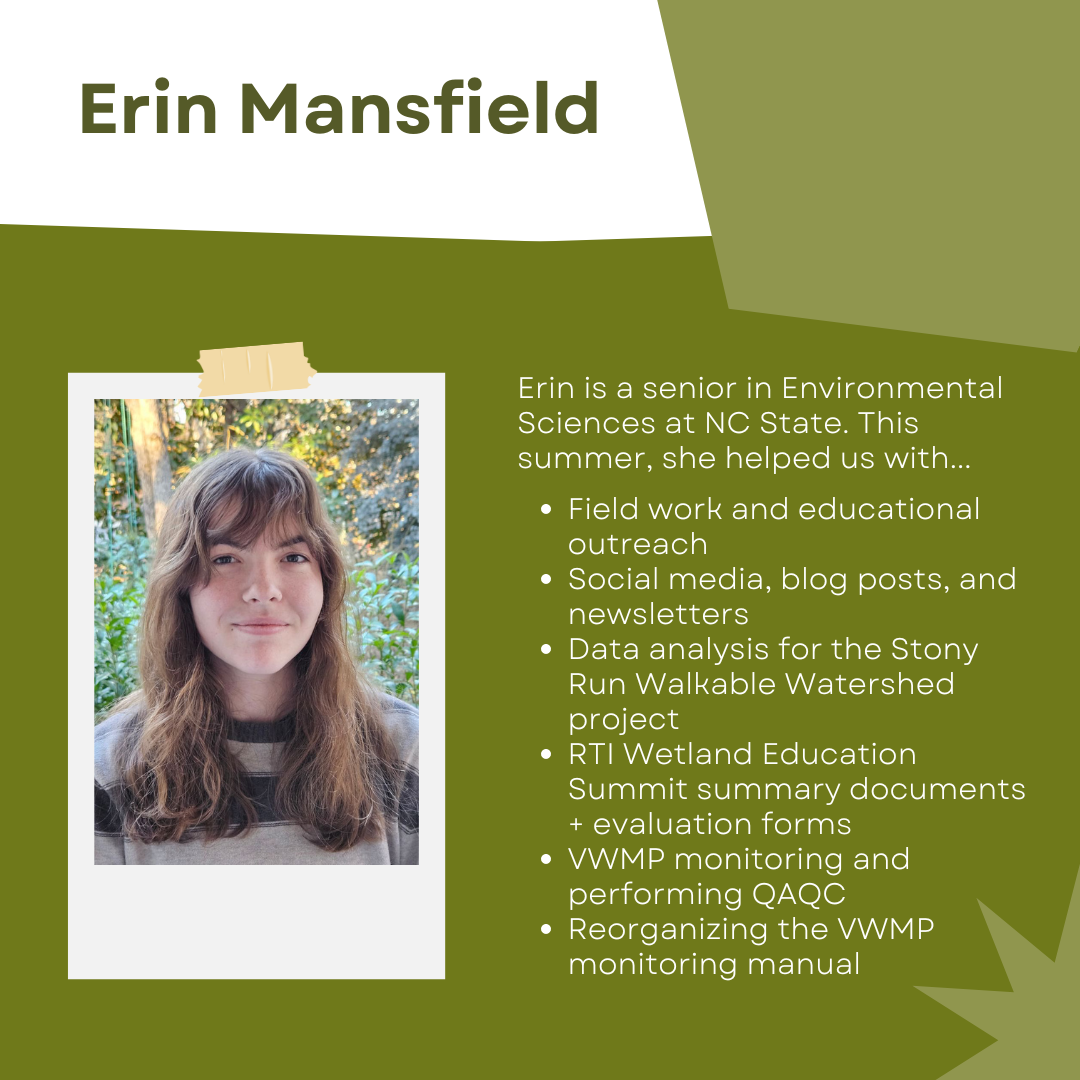
Erin Mansfield: Like a lot of people in the environmental field, I’ve always had an interest in nature but didn’t know exactly what I wanted to do with it before going to college. I went into NC State as an environmental sciences major, and I’ve really enjoyed the flexibility of the major. I took an intro to soil science class my first semester and was hooked, and since then I’ve taken several more classes for my minor, as well as working as a student lab assistant for a year in a soils lab.
2.Why were you interested in working with Carolina Wetlands Association, and how did you get involved?
Bryce Carleton: I planned on getting an internship or some other career-related work experience before I graduate. Wanting to do it outside of spring and fall semesters, I was racing for an opportunity this summer before I graduate next spring. My luck was running short until Dr. Caren Cooper told me about Carolina Wetlands Association and that they were looking for an extra intern to get something done this summer. I have an interest in wetlands and had just finished a project in a course last fall about mangrove forests of Florida and the Gulf, so these ecosystems were already at the front of my mind, so I got into contact with the director (Rick Savage) and came on board.
Erin Mansfield: Aside from soil science, I’m also interested in water quality and hydrology, so wetlands were a natural interest for me. They’re also such an important resource to protect, so I really appreciated the work Carolina Wetlands Association was doing to advocate for them. I’ve worked a lot with various university programs, but I wanted to expand my experience into the nonprofit world to get more practical career insight. I’m a student in the 2024 Climate Leaders Program at NC State, which matches you with a summer internship. Rick and everyone at Carolina Wetlands Association were kind enough to take me in, so here we are!
3. What has been some of the work you’ve done this summer, and what has been the most rewarding to you?
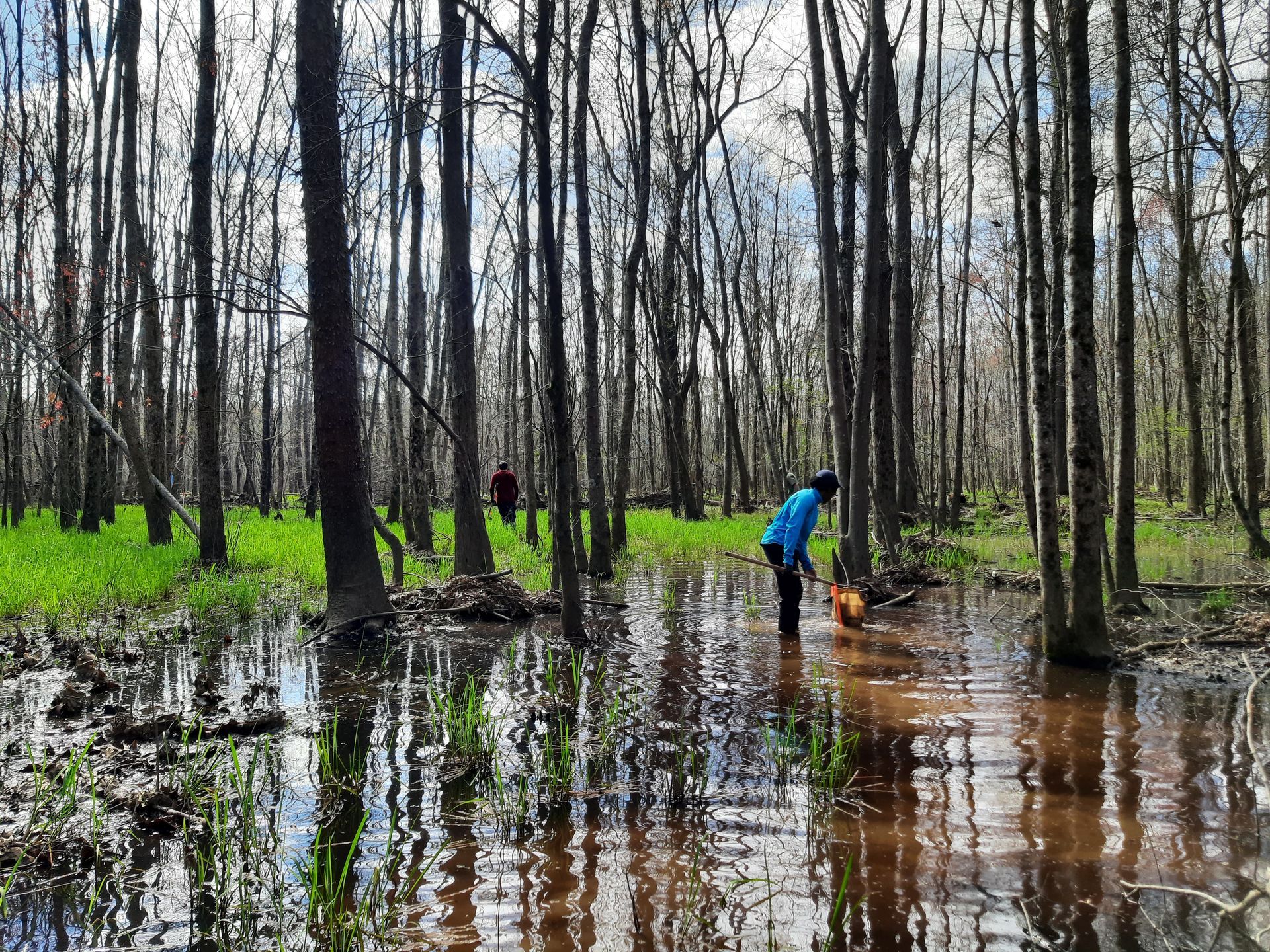
Bryce Carleton: My main task while working for Carolina Wetlands Association has been writing up an annotated bibliography for wetlands and their flood mitigation. Aside from my main task, I have been involved with or helped with a variety of things like working as a volunteer at the Wetland Education Summit in June, participating in the Volunteer Wetland Monitoring Program (VWMP) or other field events that Carolina Wetlands Association was invited to, blog posts for the website, and probably helped a little on a few miscellaneous projects or assignments that I can’t recall. Probably the most rewarding part of it was the VWMP, even though it's one of the only things not restricted to employees only. I just thought it was pretty neat to go check out and monitor these wetland locations and habitats nearby that I never knew about, despite already knowing and understanding most of the work performed during those events.
Erin Mansfield: I’ve done a little bit of everything: social media and newsletter writing, educational outreach, field work, and a lot of behind the scenes work for projects such as Volunteer Wetland Monitoring Program (VWMP). I also helped Bryce as a volunteer for the Wetland Education Summit, which was a fun experience. Recently the planning grant for the Stony Run Walkable Watershed project ended, so I worked on data analysis and making figures for the final report. There was over a year’s worth of well data and water quality data to work with, so it was a significant undertaking, but it was so rewarding to see how over a year of data collection can come together into a handful of neat and tidy graphs. I’m now working on an update to the Stony Run project webpage to explain the relevance of all the data collected. I’ve also really enjoyed volunteering with VWMP and just being able to get out and experience our local wetlands.
You might also like
Celebrating Our Carolina Wetlands